Here’s a detailed article on The Rise of Quantum Computing: Hype vs. Reality in 2025 — what’s real, what’s overblown, where it’s headed, and what challenges remain.
The Rise of Quantum Computing: Hype vs. Reality in 2025
Quantum computing has been one of the most talked‑about technologies of recent years. In 2025 the buzz is louder than ever, with headlines promising everything from unbreakable encryption to solving climate change. But how much of this promise is grounded in engineering and science, and how much is still speculative? This article examines the state of quantum computing in 2025 — what has been achieved, what’s realistic, and what remains more aspirational.
What Quantum Computing Is Supposed to Do
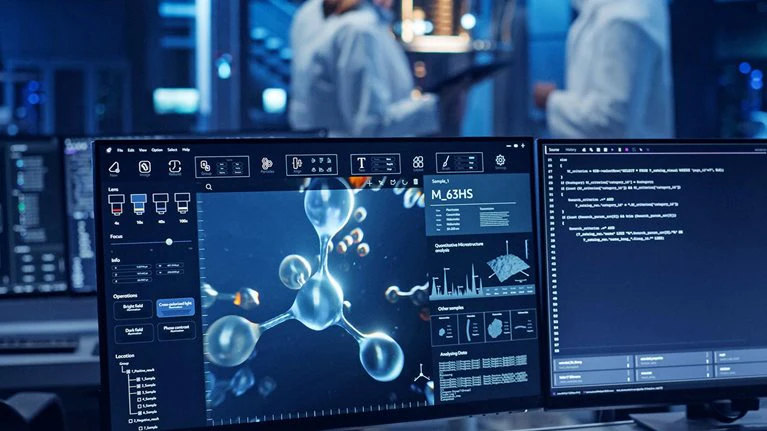
At its core, quantum computing leverages quantum mechanics—superposition, entanglement, interference—to do things classical computers find very hard or impossible. Instead of bits that are either 0 or 1, quantum bits (qubits) can exist in multiple states simultaneously. Error correction and logical qubits add structure so that quantum systems can reliably perform complex computations. If realized on a large scale, quantum computers promise breakthroughs in cryptography (breaking certain encryption systems or creating quantum‑safe ones), simulation of molecules (for drugs, materials), optimization problems, financial modeling, weather & climate simulations, materials design, etc.
What Has Actually Been Achieved by 2025
Hardware Progress & Qubit Improvements
Progress is steady. There are several hardware platforms in use, such as superconducting qubits (IBM, Google), trapped ions (IonQ), photonic qubits (companies like PsiQuantum), and emerging / theoretical ones like topological qubits. Each has trade‑offs: speed, coherence (how long qubits maintain quantum states without error), error rates, required cooling, etc.
There have been important improvements in qubit counts, fidelity (how often qubits do what they are supposed to without error), and error reduction. For example, very low error rates in single operations have been demonstrated. As well, companies are pushing toward more modular or scalable system architectures. (Live Science)
Quantum‑as‑a‑Service (QaaS)
One of the biggest real‑world shifts is cloud access to quantum hardware. Researchers, developers, and some small companies are using quantum machines via cloud platforms, rather than needing to build their own quantum labs. This allows experimentation, algorithm development, exploring hybrid quantum‑classical workflows, etc. (McKinsey & Company)
Early Real‑World Use Cases & Specialized Applications
Some early applications are showing promise:
- Quantum simulation (for molecules, materials) is progressing. Problems that are very complex in nature, like chemical reactions, can be better modeled in quantum or quantum‑inspired systems. This is especially relevant to pharmaceutical or materials science sectors. (McKinsey & Company)
- Optimization problems (logistics, supply chain, portfolio optimization etc.) are being explored with hybrid quantum‑classical systems, even if they don’t yet show overwhelming quantum advantage. (McKinsey & Company)
- Cryptography / security has begun adapting: quantum‑safe cryptographic algorithms are being developed because, even though quantum computers that break common encryption are not yet here, the threat is anticipated. (McKinsey & Company)
Demonstrable Technical Breakthroughs
Some notable milestones:
- Unprecedented low error rates in certain quantum gate operations on particular qubit types. (Live Science)
- New record for large qubit arrays in some systems, better coherence times etc., sometimes operating in novel physical regimes (e.g. neutral atoms, photonics) which may relax some cooling or environment constraints. (Live Science)
- Efforts like “magic state distillation” and other techniques needed for fault tolerance are beginning to see practical implementation. These are important for building logical qubits with low error, a requirement for larger scale more reliable quantum computing. (Medium)
What Is Still Hype or Overstated
Timeline & Scale
Although there is strong progress, many claims that powerful, general‑purpose quantum computers are just around the corner are overly optimistic. Real fault‑tolerant, universal quantum computers with millions of logical qubits and reliably low error rates remain many years off. Some estimates suggest that quantum machines capable of breaking strong encryption (e.g., RSA‑2048) are not likely to exist for decades. (MITRE)
Overpromising Utility
Some headlines suggest quantum computing will replace classical computing or that it will immediately disrupt most industries. But many quantum supremacy or quantum advantage claims are for very specific, contrived tasks—not tasks that are of direct commercial or practical use. For many real‑world problems, classical or classical + AI + specialized hardware still outperform quantum prototypes. (RealityPaper)
Encryption Breaking Myths & Fears
There’s a perception that quantum computers will soon break all current cryptography and make existing security infrastructure obsolete. While in theory some quantum algorithms (like Shor’s algorithm) can break certain public‑key cryptosystems, in practice the number of error‑corrected logical qubits needed is extremely large, far beyond current capability. So claims that all encryption is at imminent risk are exaggerated. However, preparing for post‑quantum cryptography is sensible. (McKinsey & Company)
Overvalued Companies & Hype in Investment
Some startups and companies have been valued very highly on expectations rather than actual revenues or useful products. There are cautionary tales of firms making ambitious claims with modest deliverables so far. The hype cycle means investing in quantum is high risk; some players may not survive unless they deliver. (PostQuantum.com)
Key Challenges & Bottlenecks
These are some of the technical, economic, and organizational challenges that still limit how far and how fast quantum can move.
- Error correction and coherence times: Qubits lose their quantum state easily. Making many physical qubits work together, correcting errors, maintaining coherence, is very hard.
- Scaling qubit counts without unacceptable error rates: More qubits bring more complexity—controls, wiring, cooling, isolation. Physical constraints, noise, cross‑talk, hardware reliability all become tougher.
- Cooling and environment demands: Many quantum systems require extremely low temperatures (near absolute zero), ultrahigh vacuum, isolation from electromagnetic noise etc. These are expensive, large, and delicate setups.
- Algorithmic maturity: While a few algorithms are well‑known, many quantum algorithms still need development, particularly ones that yield exponential or super‑quadratic speedups for problems of practical importance.
- Cost and hardware resources: Building quantum hardware is expensive, and running it (cooling, maintenance, error correction) adds operational cost.
- Talent & expertise: Quantum physics, quantum engineering, error correction, quantum algorithm design are highly specialized fields. There is still a scarcity of people with deep expertise.
- Commercialization gap: Bridging the gap between lab proof‑of‑concept and large scale production and deployment is non‑trivial. Integration with existing systems, delivering reliable solutions, cost‑effectiveness, and convincing businesses to adopt quantum solutions will take time.
What to Expect Going Forward: Realistic Near‑Term & Mid‑Term Trends
Hybrid Quantum‑Classical Systems
Most useful systems in the near future will combine quantum and classical computation. Classical computers will continue doing what they do well; quantum chips will be applied for specific subproblems (e.g., optimization, chemical simulations). Enterprises will adopt hybrid workflows. (McKinsey & Company)
Domain‑Specific Applications
Industries like pharmaceuticals, materials science, chemicals, logistics and supply chain, finance (e.g., portfolio optimization or risk modeling) are likely to see the first real value. Simulating molecules, discovering new catalysts, modeling materials for battery or semiconductor improvements are strong candidates. Cryptography and cybersecurity (especially preparing for quantum threats) will continue being an area with immediate relevance. (McKinsey & Company)
Incremental Hardware Improvements
We should expect gradual improvements in qubit fidelity, coherence times, better error mitigation techniques, better noise suppression, improved interconnects, more stable qubit types, maybe progress in technologies like photonics, topological qubits, neutral atoms. Scaling remains hard, but every year brings incremental gains. (Live Science)
Growing Regulatory & Security Preparedness
As the threat of quantum‑enabled attacks becomes more plausible (though not imminent), governments, security agencies, and industry will accelerate work on quantum‑safe cryptography. Data protection, standards, policy, regulatory frameworks will evolve. (McKinsey & Company)
Investment with Caution
Investment is going to become more discriminating. The “quantum hype” period is giving way to expectation for measurable results. Startups will need to show working demos, useful circuits, partnerships with domain stakeholders etc. Governments and big tech will remain major funders. (Quantum Computing Report)
Hype vs Reality: A Summary Comparison
| Aspect | What People Often Hype | What Reality Looks Like in 2025 |
|---|---|---|
| Qubit counts & power | “1,000s → millions tomorrow”, full quantum advantage everywhere | We have progressed into the noise‑limited intermediate scale (NISQ) era; hundreds to low thousands of qubits in some systems, but noisy and error‑prone. |
| Use cases | Solving complex industry‑wide problems now, breaking encryption any moment, replacing all classical compute | Mostly experimentation, proof‑of‑concept, simulations; some early industrial use for narrow problems; encryption break‑threat is long term. |
| Hardware availability | Quantum computers are everywhere / affordable | Access through cloud services; hardware remains rare, expensive, fragile. |
| Commercial returns | Quantum companies widely profitable or close to being so | Many quantum companies still not profitable; revenue is modest in most cases vs investment. |
| Timelines | “Quantum era” fully here or just about here | Many experts believe large‑scale utility still many years away (10‑20+ years depending on application). |
Why the Gap Between Expectation and Reality Matters
- Realistic planning: For businesses, policy makers, investors—misjudging the maturity of quantum tech can lead to wasted resources or missed opportunities.
- Avoiding disappointment: Overhyped promises that don’t materialize can lead to backlash, loss of trust, and disinvestment.
- Balanced investment: Encouraging progress in promising areas without losing sight of the hard work required in hardware, error correction, algorithms.
- Security implications: Misunderstanding when encryption may be compromised could lead to catastrophic risks if people delay implementing quantum‑safe systems.
- Shaping workforce/skills: Organizations need to invest early in quantum education, skills, infrastructure, so when quantum solutions become practical, they are ready, rather than scrambling behind the curve.
Outlook: When Might Quantum Computing Become More Mainstream?
While no one can predict exactly, based on present progress a few plausible benchmarks or timeframes:
- Within 5 years (2025‑2030): More robust hybrid quantum‑classical tools; domain‑specific applications in simulation, optimization; better error mitigation; broader cloud access; proof of quantum advantage in practical tasks.
- Within 10 years (2030‑2035): Possible emergence of fault‑tolerant logical qubits in limited systems; more consistent demonstrations in cryptography or materials science; possibly early practical quantum devices serving niche, high‑value industries.
- Beyond that: Full universal quantum computers capable of large‑scale general‑purpose computation, significant disruption in cryptography, finance, materials, etc.
Conclusion
Quantum computing in 2025 is simultaneously more impressive than many people realize and still less capable than many believe. The advances in qubit technology, error rates, quantum‑cloud access, and early applications are real, and they suggest a future where quantum computing will matter. But the grand promises—quantum computers solving most major computational challenges, breaking all encryption, being everywhere tomorrow—remain aspirational.
For those following or investing in quantum computing, the strategy is clear: be informed, be patient, focus on early wins, and distinguish hype from reality. The quantum future is coming, but not overnight.
If you’d like, I can prepare a version of this article focused on quantum computing in South Asia (or Pakistan) – what local trends, investments, or research are underway there.