- Here are ten of the most disruptive technologies of 2025 so far, along with how and why they are reshaping industries and society.
The 10 Most Disruptive Technologies of 2025 (So Far)
1. Generative AI & Autonomous Agents
These tools are no longer just novelties. They are being embedded across industries, doing things like generating video from text prompts, producing interactive 3D content, handling multi‑step tasks on their own, and assisting creative work in music, marketing, architecture, etc. Their ability to automate content creation, accelerate workflows, and shift human roles is transforming how businesses, media and education operate. (Disruptiv-e)
2. Spatial Computing, AR & VR
Augmented Reality, Virtual Reality, and mixed forms (often referred to together as spatial computing) are merging digital layers with the physical world. Devices are becoming more immersive, with better hand‑tracking, object interaction, and real‑time overlays. These are being used for training, design, collaboration, education, navigation, etc. The boundary between “real” and “virtual” is getting more porous. (Disruptiv-e)
3. Quantum Computing
Quantum machines are starting to solve problems classical systems cannot feasibly touch, like complex simulations, optimization, encryption, and drug discovery. The promise is still being realized slowly, but 2025 is seeing more pilot programs and real‑use cases. (Disruptiv-e)
4. Brain‑Computer Interfaces (BCIs)
Interfaces that allow direct communication between the brain and external devices are making strides. Human trials (both invasive and non‑invasive) are advancing. Applications include medical assistive devices, neurotherapy, communication aids, and potential in gaming or virtual control. Ethical, safety, data privacy and biocompatibility issues are among the big challenges. (Disruptiv-e)
5. Fusion Energy & Clean Tech Breakthroughs
Clean energy technologies are evolving rapidly. There are pilot projects for fusion, new battery technologies (solid state, perovskite solar etc.), improvements in solar efficiency and smart grid technologies. These are important because they offer scalable alternatives to fossil fuels and could fundamentally change energy economics. (Disruptiv-e)
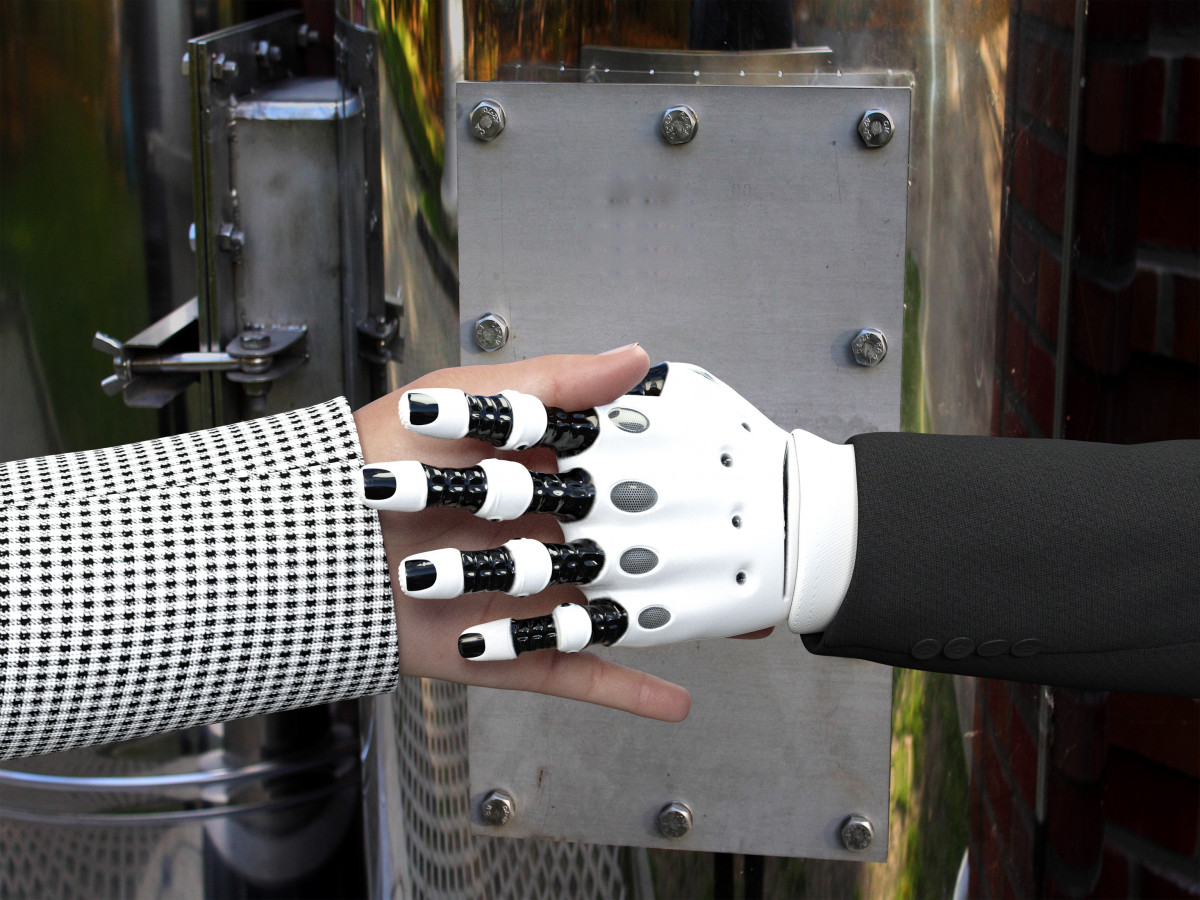
6. Robotics & Automation 2.0
Robots are going beyond factory assembly lines. They are becoming more general purpose, more adaptive, more collaborative with humans. Soft robotics (robots that are flexible or safe for human interaction), autonomous delivery bots, warehouse automation, robotic healthcare applications etc. are all ramping up. These shifts challenge many traditional labor models. (Disruptiv-e)
7. Programmable Materials & Smart Surfaces
Materials that change their properties dynamically (shape, color, stiffness), self‑healing polymers, smart fabrics, electrochromic glass, shape‑memory alloys etc., are becoming more viable. These enable things like adaptive clothing, responsive architecture, vehicles that adapt to conditions, etc. This tech blurs the line between hardware and software in physical objects. (Disruptiv-e)
8. Synthetic Biology & Gene Editing
Biology is being treated more like software. CRISPR and related gene editing tools, AI‑designed bio‑molecules, engineered organisms for specific functions (e.g. making rare enzymes), organ‑on‑chip for testing, climate‑resistant crops etc., are all growing fast. The potential is huge, but so are the ethical, regulatory and safety concerns. (Disruptiv-e)
9. Edge Computing & 5G / Toward 6G
Networks are getting smarter and more distributed. Edge computing moves processing closer to the source (devices, sensors) rather than relying purely on centralized cloud. With 5G’s expansion and early plans for 6G, latency goes down, capacity and responsiveness go up. This supports real‑time applications like autonomous machines, AR/VR, IoT, etc. (Medium)
10. Hyperconnectivity, IoT & Cybersecurity Evolution
Massive deployments of connected sensors and devices (IoT) are producing unprecedented volumes of real‑time data. This demands advances in security, privacy, identity, and trust frameworks. AI‑powered threat detection, zero trust architectures, quantum‑resistant cryptography, etc. are becoming essential. Disruptions in how industries configure digital infrastructure, governance, resilience are being driven by these. (StartUs Insights)
Why These Technologies Are So Disruptive
- They combine physical, digital, and biological layers rather than operating in just one domain
- They reduce latency, increase automation, and allow adaptability in real time
- They shift costs and capabilities: tasks that required big infrastructure can now be done with lighter, more distributed systems
- They push ethical, regulatory, societal boundaries (privacy, human augmentation, energy)
-